
DARJEELING TEA BENEFITS
Discover the real, research-backed benefits of Darjeeling tea

DARJEELING TEA
Darjeeling tea is grown high in the misty hills of West Bengal, India, where cool air and slow growth give the leaf its famous “muscatel” flavor. But beyond taste, it’s also a genuinely well-researched beverage. This guide covers what science actually says about Darjeeling tea’s antioxidants, caffeine, and health effects—no exaggeration, no unproven claims.
Quick answer: Darjeeling tea is a lightly oxidized black tea (also made as green and white) grown exclusively in the Darjeeling District. It’s rich in polyphenol antioxidants, contains 40–65 mg of caffeine per cup, and is linked in research to better heart and vascular health, improved focus, and gut microbiome support. It is not a treatment or cure for any disease.
What Is Darjeeling Tea?
Darjeeling tea comes from Camellia sinensis, grown at altitudes up to 6,500 feet across roughly 87 registered gardens. Most authentic Darjeeling tea is processed as orthodox tea — whole or lightly broken leaves — which preserves more aroma and flavor than the crushed tea bag method used for mass-market blends.
The Four Flushes of Darjeeling Tea
| Flush | Season | Flavor |
| First Flush | Feb–Apr | Light, floral, delicate |
| Second Flush | May–Jun | Classic muscatel sweetness |
| Monsoon Flush | Jul–Sep | Bold, robust, used in blends |
| Autumn Flush | Oct–Nov | Mellow, nutty, smooth |
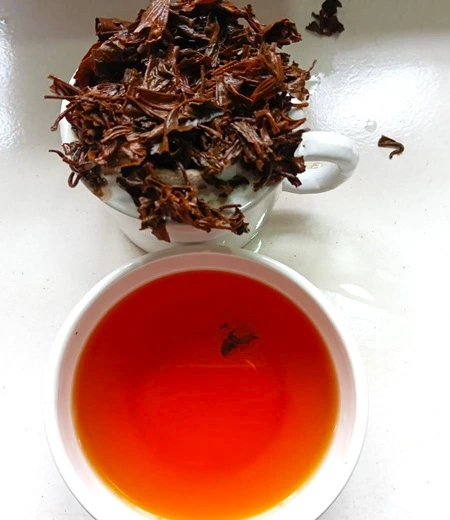
Nutrition and Caffeine
Brewed plain, Darjeeling tea has about 2 calories per cup, no sugar, and no fat. A lighter Darjeeling or Chinese-style black tea typically contains around 40 mg of caffeine per cup, compared with 60–70 mg for a strong Assam—roughly half the caffeine of coffee. Up to 400 mg of caffeine a day is considered safe for most healthy adults by the FDA, leaving room for several cups daily for most people.
| Beverage (8 oz) | Caffeine |
| Darjeeling black tea | 40–65 mg |
| Green tea | ~28 mg |
| Coffee, drip | ~95 mg |
| Herbal tisane | 0 mg |
Darjeeling Tea Benefits for Health (Evidence-Based)
Heart and vascular health: Clinical trial reviews show regular black tea consumption improves flow-mediated vasodilation, largely due to its antioxidant and anti-inflammatory effects. A 2017 study found daily tea drinkers had an 8% lower risk of heart disease and 10% lower risk of major cardiac events.
Focus and alertness: Black tea is linked to improved attention and alertness, likely from the combined effect of caffeine and L-theanine—producing calmer energy than coffee alone.
Gut health: Research links regular consumption to gut microbiota benefits, including promotion of beneficial bacteria like Flavonifractor plautii.
Inflammation: Trials suggest black tea may reduce inflammatory markers like CRP.
Cancer research: Lab and animal studies suggest theaflavins may inhibit tumor cell growth, but these effects are not yet proven in humans — tea should never replace medical care.
The Four Flushes of Darjeeling Tea
| Tea | Caffeine | Flavor | Standout Trait |
| Darjeeling | 40–65 mg | Floral, muscatel | Aroma + moderate caffeine |
| Green Tea | ~28 mg | Grassy, vegetal | High EGCG catechins |
| Matcha | ~70 mg | Umami, rich | Whole leaf consumed |
| Assam | 60–90 mg | Bold, malty | Strong, chai base |
| Coffee | ~95 mg | Roasted | Sharpest energy spike |
| White Tea | 15–30 mg | Very delicate | Lowest caffeine |
conclusion
Darjeeling tea earns its reputation honestly: a moderate caffeine lift, well-studied antioxidants, and a flavor no other region has replicated. It isn’t a miracle cure, but as a daily habit backed by real research on heart health, focus, and gut wellness, it’s one of the more genuinely beneficial beverages you can reach for — especially when you know it’s authentic, GI-certified leaf in your cup.